
• SELECTED PROJECTS
  • About
  • Curriculum Vitae
  • IMPACT & METHODOLOGY
  • ARTIST STATEMENT
  • Contact
freskoimageworks.com
  • SELECTED PROJECTS
  • About
  • Curriculum Vitae
  • IMPACT & METHODOLOGY
  • ARTIST STATEMENT
  • Contact

Admiration vs. Objectification: A Necessary Distinction

SOUTH STREET, PHILADELPHIA © FRESKO IMAGEWORKS INC. 2024

There is a subtle but important distinction between being admired and being objectified—one that is often blurred, especially within hookup culture among gay men. On the surface, the two can feel similar. Both involve attention. Both can involve desire. Both can, at times, feel validating. But beneath that surface, they are fundamentally different experiences, shaped by intention, depth, and the way one is truly seen.

In environments where attraction is immediate and often visually driven, it becomes easy to conflate admiration with objectification. A compliment on appearance, a lingering glance, a direct expression of sexual interest—these can all register as forms of being desired. And in a culture that frequently places a premium on physicality, that desire can feel affirming. It can feel like recognition, like approval, like a kind of currency. But admiration and objectification do not operate on the same level.

Admiration involves recognition of the whole person. It may begin with physical attraction, but it does not end there. It carries with it a sense of curiosity, respect, and an interest in the individual beyond what is immediately visible. To be admired is to feel seen—not just for how you look, but for how you think, how you move through the world, how you exist as a complete human being. There is an element of presence in admiration, a willingness to engage with complexity rather than reduce it.

Objectification, on the other hand, is inherently reductive. It isolates one aspect of a person—most often their physical body—and elevates it above all else. In doing so, it strips away context, personality, and depth, reducing the individual to something that can be consumed, evaluated, or desired in a purely transactional way. It is not about who you are, but about what you represent in a given moment.

Within hookup culture, these two experiences are often intertwined to the point of being indistinguishable. Interactions are frequently brief, driven by immediacy, and centered around physical attraction. In that space, objectification can easily be mistaken for admiration, because both are expressed through desire. But desire alone is not enough to constitute admiration. Without recognition of the person beyond the body, it remains surface-level.

This is not to suggest that objectification is always harmful or entirely avoidable. In certain contexts, it may even be mutually understood and accepted as part of the dynamic. The issue arises when it is misinterpreted—when being desired for one’s body is mistaken for being valued as a person. That confusion can lead to a kind of emotional dissonance, where the attention received feels affirming in the moment, but ultimately leaves something unfulfilled.

Understanding the difference between admiration and objectification often comes with maturity. It requires a shift in perspective—one that moves beyond immediate validation and begins to question the quality of the attention being received. It involves asking not just “Am I desired?” but “Am I seen?” Not just “Am I wanted?” but “Am I valued?”

This awareness can change how we navigate relationships and interactions. It can influence what we accept, what we seek, and what we recognize as meaningful. It can also reshape how we view ourselves, helping to disentangle self-worth from purely physical validation. In a culture where attention is often fleeting and surface-driven, the ability to distinguish between admiration and objectification becomes an important form of self-awareness. It allows us to engage more intentionally, to recognize when we are being reduced, and to seek out connections that acknowledge us more fully. While being desired can feel good, being truly seen is something else entirely.

tags: #AdmirationOrObjectification, #SeenOrUsed, #DesireVsRespect, #AmIJustABody, #PrettyButReplaceable, #KnowYourWorthOrDont, #HookupCultureTruth, #GayDatingReality, #SurfaceLevelOrReal, #DoYouEvenSeeMe, #BodyFirstPersonSecond, #ValidationOrConnection, #AttentionIsntAffection, #LustVsLove, #UsedOrValued, #ThisIsTheProblem, #LetsTalkAboutIt, #UncomfortableTruth, #RealTalkOnly, #ModernIntimacy, #AreWeOkay, #SayItOutLoud, #NoFilterTruth, #DatingIsBroken, #WakeUpCall, #ReflectiveWriting #VisualStorytelling #CreativePractice #PhilosophyOfLife, #VisualStorytelling #DocumentaryPhotography #ReflectiveWriting #CreativePractice #thoughtsonpride
Friday 06.26.26
Posted by FRESKO IMAGEWORKS
 

Pride Was Never About Convincing the People Who Hate You

“THIS MOMENT”

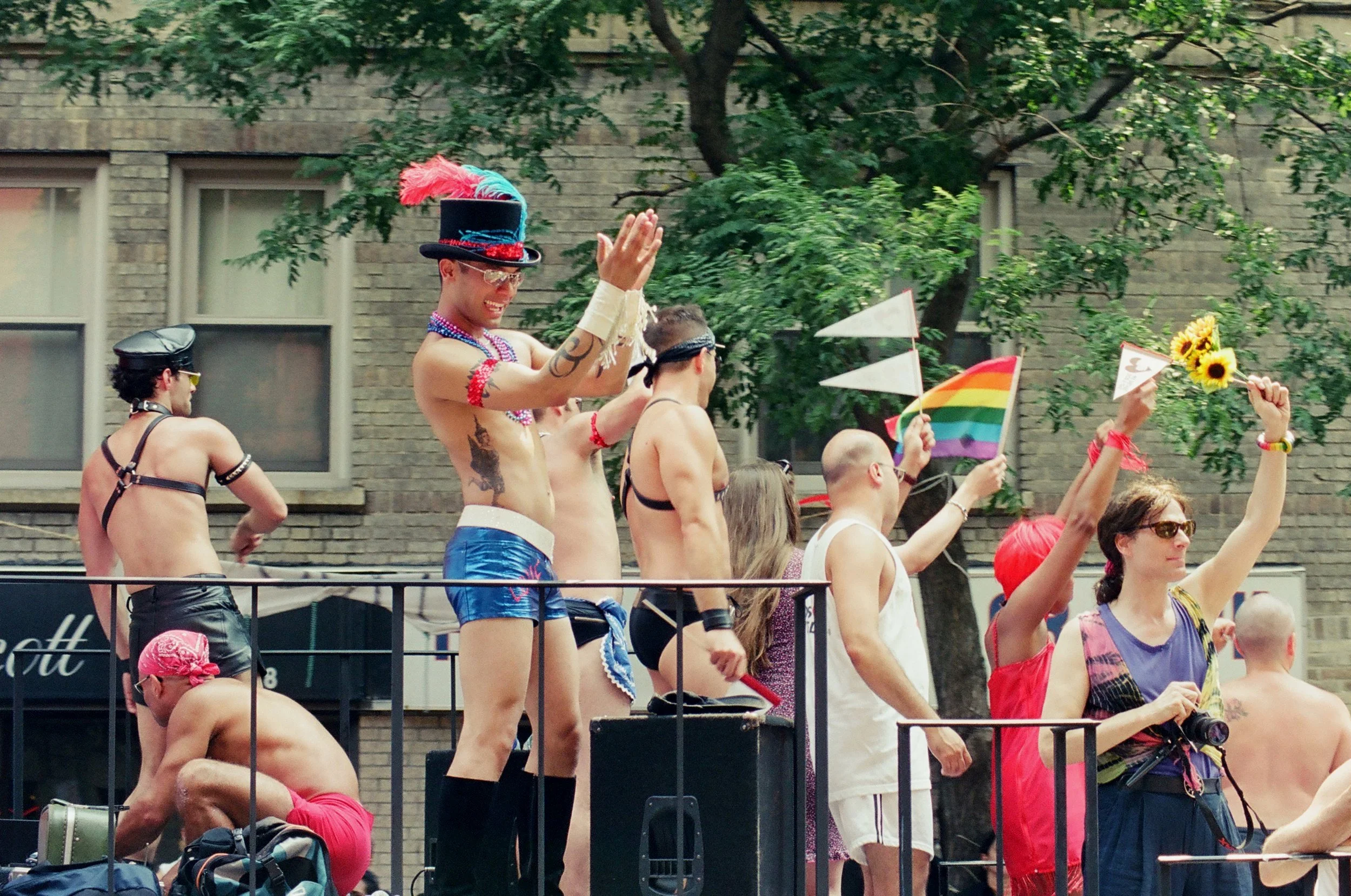
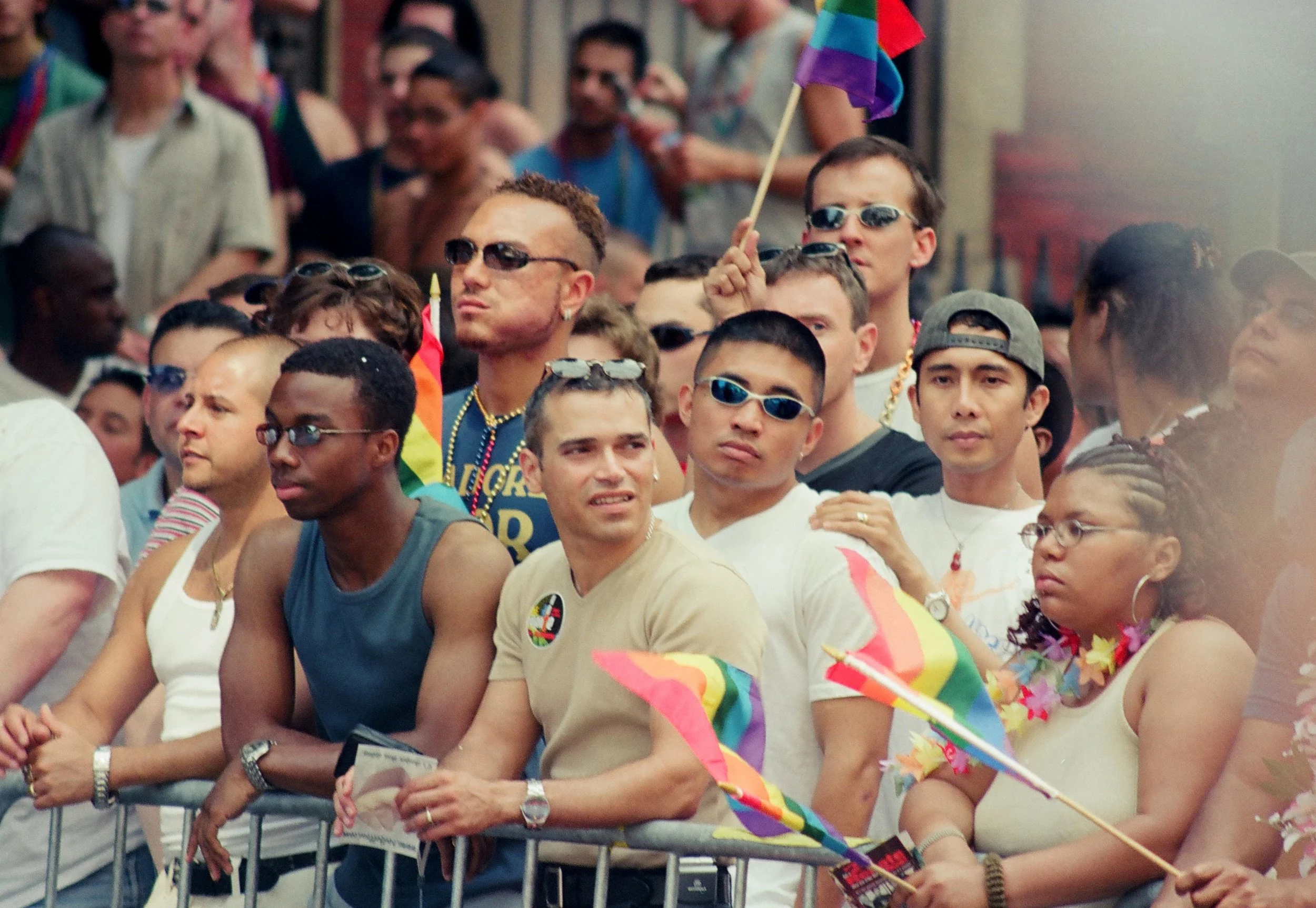
Photos By Francisco Escobar - NYC Pride 2003 from the STREET NYC Collection

Every June, social media becomes predictable. Corporations change their logos. People post rainbow flags. Others complain about rainbow flags. Supporters become louder. Opponents become louder. Everyone seems to pick a side and begins performing it publicly. But somewhere in the middle of all that noise, I think people occasionally lose sight of what Pride was actually supposed to be.

One thing broader LGBT acceptance has created is a strange expectation. There seems to be an assumption that increased visibility should somehow produce universal approval. If enough people come out; if enough representation exists in media; if enough companies issue carefully worded statements of support, then eventually everyone will come around. The implication is that acceptance is an inevitable destination and that resistance is simply a temporary obstacle standing in the way of progress. I don't think that's how people work.

Some people will never approve. Some people will never understand. Some people will never support you — and perhaps most importantly, some people are not worth the emotional labor required to be convinced.

Coming out was never a magical event that guaranteed applause. It was never a transaction where honesty automatically produces acceptance. For some people, coming out strengthens existing relationships. For others, it destroys them. Some people discover support in places they never expected to find it. Others discover rejection from people they believed would always love them. That reality is painful. But it is also clarifying.

“FIERCE”

While coming out may cost certain relationships, it often creates something more valuable: the freedom to stop negotiating your existence; the freedom to stop performing; the freedom to stop editing yourself for the comfort of others; the freedom to stop carrying the exhausting burden of someone else's expectations. Once that burden falls away, something interesting happens.

You begin finding your people; your allies; your chosen family. You begin to find the friends who celebrate rather than tolerate you; the partners who see you clearly. They are the communities where your existence does not require explanation, justification, or defense. They are the people who offer acceptance freely rather than conditionally. That is where Pride has always made the most sense to me.

It is not a demand for approval nor is it a campaign to force agreement. It is not to silence criticism, nor is it a request for applause. Pride is what happens after you stop needing those things.

There is a misconception, particularly online, that confidence means winning over your critics; that validation arrives when everyone finally agrees with you; or that dignity requires universal acceptance. The reality: maturity often looks exactly the opposite. It looks like recognizing that some people are committed to misunderstanding you. It looks like understanding that some people need villains for their worldview to function. It looks like accepting that hatred frequently has very little to do with the people being hated. But most importantly, it looks like refusing to organize your life around changing minds that have already been made up.

“JOYFUL”

The truth is that social progress does not eliminate prejudice. Visibility does not eliminate ignorance. Representation does not eliminate resentment. There will always be people who disapprove; people who object. There will always be people who find reasons to diminish, shame, mock, or dehumanize others. The mistake is believing that those people somehow deserve a seat at the center of your life. They do not.

Pride, at its healthiest, is not an argument directed toward those people at all.  It is a refusal to internalize their judgment; to carry their shame,; or to measure your worth according to standards designed by people who never intended to respect your humanity in the first place.

When someone says, "I don't approve," Pride responds, "That isn't my problem."

When someone says, "You should be ashamed," Pride responds, "I won't be."

When someone says, "I don't accept you," Pride responds, "I wasn't asking for your permission."

That is not arrogance. That is liberation. There is a profound difference between wanting acceptance and needing it. The former is human. The latter is captivity.

At some point, every LGBT person must decide whether they are going to spend their lives chasing validation from people committed to withholding it, or whether they are going to invest that energy into building relationships with people capable of offering genuine love, friendship, and respect. One path leads to endless frustration. The other leads to peace. Pride was never about forcing everyone to celebrate you. It was never about becoming immune to criticism. It was never about creating a world where nobody disapproves. It is about surviving in a world where some people always will. It is about finding one another. It is about building communities where dignity is assumed rather than negotiated. It is about creating spaces where people could live honestly without apology. Most of all, it is about understanding that your value as a human being is not determined by the approval of those who would diminish you.

What Pride ultimately offers is not victory over those people, but freedom from them. It is not an argument designed to persuade the unwilling. It is not a debate stage. It is not a referendum on whether others approve of your existence. Pride is the moment one realizes that the opinions of those committed to misunderstanding you are not nearly as important as they have convinced you they are. The goal is not universal acceptance. The goal is self-acceptance. The goal is finding community among those who offer respect freely rather than conditionally. The goal is building a life that is not held hostage by the approval of people who never intended to give it.

“ELATED”

Social media often obscures this reality. It creates the illusion that every hateful comment requires a response, that every criticism demands engagement, that every act of ignorance must be corrected. In practice, many people are not interested in learning. They are interested in performing. They are interested in provoking. They are interested in drawing others into endless cycles of outrage that consume emotional energy without producing meaningful change. There is tremendous power in recognizing when a conversation is no longer worth having. Not every critic deserves a rebuttal. Not every accusation deserves a defense. Sometimes the most liberating response is simply refusing to take seriously people who have not earned the authority they claim to possess.

The same principle applies to institutions. Corporations drape themselves in rainbow flags as though social progress can be achieved through seasonal branding campaigns one month out of the year. Multinational companies that spent eleven months pursuing profit suddenly discover their commitment to equality the moment Pride Month becomes marketable. Logos change colors. Advertising departments issue carefully crafted statements. Merchandise appears in stores. Social media teams post declarations of solidarity written by committee. While some of these efforts undoubtedly emerge from sincere people working within those organizations, it is difficult to ignore the transactional nature of much of it. Corporations are not activists. They are not moral authorities. They are not your friends. Their primary responsibility remains exactly what it has always been: generating revenue. When support for LGBT communities aligns with profit incentives, many companies are eager to participate. When that support threatens profitability, their courage often becomes far less visible.

This does not mean representation lacks value. Visibility matters. Seeing oneself reflected in media, advertising, and public life matters. But there is a difference between appreciation and dependency. Just as LGBT people should not base their self-worth on the approval of their critics, neither should they base it on the approval of corporations eager to monetize their identities. A rainbow logo is not liberation. A marketing campaign is not solidarity. A company selling Pride merchandise is not a substitute for friendship, community, family, legal protections, or genuine human acceptance. The danger lies in confusing recognition with belonging.

Belonging cannot be purchased. It cannot be manufactured by a public relations department. It emerges through authentic relationships, mutual support, shared struggle, and genuine care. It emerges among friends who answer the phone when life falls apart; among partners who remain when circumstances become difficult; among communities that provide refuge when the wider world becomes hostile. These are the things that sustain people. These are the things that matter long after the rainbow banners come down and the marketing campaigns end.

This is why I have increasingly come to view Pride not as a demand for acceptance but as a declaration of independence. One’s humanity does not require ratification from strangers, politicians, religious authorities, internet commentators, or multinational corporations. It is understanding that your worth exists independent of their approval.

The people who love you freely matter. The people who respect you matter. The people who stand beside you when doing so costs them something matter. The people who support your happiness, your growth, your safety, and your dignity matter, They matter more than any rainbow flag, more than any parade, any slogan, or any social media campaign. This is the enduring lesson of Pride: you do not have to spend your life convincing people to see your worth. You only have to stop giving power to those who refuse to see it.

SHOW YOUR PRIDE YOU SASSY BITCH!


tags: #GetYourShitTogether, #HardTruths, #SelfReflection, #PersonalAccountability, #WakeUpCall, #LifeLessons, #MomentsOfClarity, #HumanBehavior, #NightlifeReflections, #PrideReflections, #LGBTQVoices, #GayPerspective, #UrbanMoments, #ManhattanNights, #RealTalk, #PersonalGrowth, #InnerWork, #ReflectiveWriting, #ThoughtfulWriting, #LifeObservations, #HonestConversations, #HumanExperience, #DepthOverNoise, #IdeasWorthExploring, #pridemonth
Friday 06.12.26
Posted by FRESKO IMAGEWORKS
 

Get Your Shit Together!

Some years ago I was attending a Pride event in Manhattan, one of those crowded gatherings where the music is loud, the drinks are flowing, and the energy oscillates somewhere between celebration and emotional release. At one point I stepped outside to smoke a cigarette, needing a brief break from the noise and the density of people inside. While I was standing there, I noticed another man nearby who appeared to be doing the same thing—taking a quiet moment away from the crowd. He seemed to be by himself, lingering near the edge of the sidewalk. I got the impression he had arrived with friends but had separated from them for a moment of solitude. What caught my attention first was that he was young and strikingly handsome, with a very distinctive look. The sort of person who, from the outside, appeared to have a lot going for him. The type of person people often assume is moving through life with ease. But there was something else about him that contradicted that impression. He looked troubled. Not dramatically so, but in the quiet way someone looks when they are carrying something heavy internally. His posture was withdrawn, his expression distant. It didn’t seem like he was having a particularly good day. I offered him a cigarette. He accepted, and we stood there for a moment in silence. Eventually I asked, casually, what was going on. I didn’t want to pry or make him uncomfortable, but sometimes a small moment of connection can make a difference. After a pause he said something that caught me off guard. “Nothing seems to be working out,” he said. Then he looked at me and added, almost dismissively, “You have a boyfriend, you have muscles, you have it all together… you wouldn’t understand.”

I remember being taken aback by that statement, not because it was insulting, but because it revealed something fascinating. In that moment I realized that what people see when they look at me is often very different from what I know to be true about my own life. So I responded honestly. “I hate to break it to you,” I told him, “but I don’t have it all together…and if you look around this bar, most of the people here are emotionally stunted in some way and probably going through a version of what you’re experiencing. You’re not as alone as you think.”

We talked briefly after that. I don’t know whether the conversation helped him or not. It’s possible it did, or perhaps it simply passed the time for a few minutes before we both went back inside. I’ll never really know. But the interaction stayed with me because it raised a deeper question. What does it actually mean to “have your shit together”?  The phrase gets thrown around constantly, yet the criteria behind it are rarely examined. Is it financial success? Is it influence? Is it physical attractiveness, social status, or having a romantic partner? Is it landing the dream job or achieving public recognition? Society often equates these visible markers with personal stability. If someone appears successful from the outside, we assume that their internal life must be equally organized. But that assumption collapses quickly when you begin to look more closely.

Consider someone like Elon Musk. By almost any external measure, he represents the ultimate example of someone who should have his life perfectly together. He is the wealthiest individual in human history. He runs multiple globally influential companies. He is widely recognized as highly intelligent, and when he speaks, the entire world pays attention. On the surface, that sounds like the textbook definition of success. Yet when you examine some of his public behavior, contradictions begin to emerge. Despite possessing enormous influence and the ability to shape the future of technology and humanity, he frequently appears preoccupied with petty internet feuds, childish trolling behavior, impulsive commentary, and political controversies that fall far beneath someone in his position. His public persona often reveals a fragile ego, questionable judgment, and a lack of emotional intelligence that stands in stark contrast to his intellectual and professional achievements.

When those elements sit side by side, the picture becomes more complicated. If the wealthiest and arguably most influential man on earth still appears emotionally unsettled, then what exactly are we measuring when we say someone “has their shit together”?

Money clearly isn’t the answer. Fame isn’t either. Expanding upon that, physical attractiveness doesn’t guarantee emotional stability, and neither does professional success. Perhaps the truth is that no one has it completely together. What we are really witnessing when we think someone does is simply a well-managed exterior, a collection of visible signals that suggest stability from a distance. Beneath that surface, most people are navigating the same uncertainties, insecurities, and evolving challenges that everyone else faces.

That young man outside the Pride event assumed I had life figured out because of what he saw on the surface. But appearances rarely capture the full complexity of a person’s internal world. If anything, the more honest answer may be this: having your shit together isn’t a permanent state. It’s a temporary alignment of circumstances, effort, and emotional balance that shifts constantly as life unfolds. Most of us, whether we admit it or not, are simply doing our best to keep that balance from tipping too far in any one direction.

#GetYourShitTogether, #HardTruths, #SelfReflection, #PersonalAccountability, #WakeUpCall, #LifeLessons, #MomentsOfClarity, #HumanBehavior, #NightlifeReflections, #PrideReflections, #LGBTQVoices, #GayPerspective, #UrbanMoments, #ManhattanNights, #RealTalk, #PersonalGrowth, #InnerWork, #ReflectiveWriting, #ThoughtfulWriting, #LifeObservations, #HonestConversations, #HumanExperience, #DepthOverNoise, #IdeasWorthExploring

tags: #GetYourShitTogether, #HardTruths, #SelfReflection, #PersonalAccountability, #WakeUpCall, #LifeLessons, #MomentsOfClarity, #HumanBehavior, #NightlifeReflections, #PrideReflections, #LGBTQVoices, #GayPerspective, #UrbanMoments, #ManhattanNights, #RealTalk, #PersonalGrowth, #InnerWork, #ReflectiveWriting, #ThoughtfulWriting, #LifeObservations, #HonestConversations, #HumanExperience, #DepthOverNoise, #IdeasWorthExploring
Friday 06.05.26
Posted by FRESKO IMAGEWORKS
 

Motion Picture & Print Photography by FRANCISCO ESCOBAR