
• SELECTED PROJECTS
  • About
  • Curriculum Vitae
  • IMPACT & METHODOLOGY
  • ARTIST STATEMENT
  • Contact
freskoimageworks.com
  • SELECTED PROJECTS
  • About
  • Curriculum Vitae
  • IMPACT & METHODOLOGY
  • ARTIST STATEMENT
  • Contact

The “If Only” Dilemma

Years ago I was listening to a program hosted by Armand DeMille on WBAI when he discussed something he called the “if only” dilemma. The concept struck me immediately because it described a pattern of thinking that had quietly shaped much of my own internal narrative. The “if only” mindset works like this: happiness is always waiting just beyond the next achievement.

If only I had my dream job, I would finally feel fulfilled.

If only my show were picked up by a network, everything would fall into place.

If only I found the perfect romantic partner, my life would feel complete.

If only I won the big award, then my work would truly matter.

At first glance these thoughts seem harmless, at times even motivating. They create goals and aspirations. They push us to strive for improvement. But hidden within this pattern is a subtle trap. Each statement postpones happiness until a future condition is met. Life becomes a sequence of checkpoints that must be passed before satisfaction is allowed. The present moment becomes merely a waiting room for a future that may or may not arrive. This mindset is closely related to what some philosophers call the “myth of arrival.” The belief is that at some point — after enough accomplishments — we will reach a destination where everything finally makes sense. But experience suggests something different.

Every achievement that once seemed like the ultimate milestone eventually becomes part of the background. New goals emerge. New “if only” statements appear. The horizon moves forward just as we approach it. Meanwhile, the journey itself continues to unfold in real time. What the “if only” dilemma obscures is the value embedded within that journey. Every stage of pursuing a goal carries its own lessons, relationships, frustrations, and unexpected discoveries. Those experiences are not merely stepping stones toward the destination. They are life itself. When happiness is postponed until the outcome is secured, those moments lose their significance.

The most sobering realization is that the time spent waiting for the future cannot be recovered later. Once a year passes, it is gone permanently. Once a conversation ends, it cannot be relived in the same way again. The pursuit of ambition is not the problem. Goals can provide direction and meaning. The problem arises when the mind treats the present moment as insufficient — as something to be endured rather than experienced. Perhaps the challenge is learning to pursue outcomes without placing all emotional fulfillment on the other side of them.

Work toward the dream job, but recognize the skills you are building today. Develop the creative project, but appreciate the act of creating itself. Seek meaningful relationships, but value the life you already inhabit. The “if only” mindset promises happiness somewhere ahead. But the truth is that happiness cannot exist in a place that has not yet arrived. It can only exist where you already are.
tags: #IfOnlyDilemma, #IfOnlyMindset, #DeferredHappiness, #MindsetShift, #HappinessNow, #PersonalAwareness, #SelfReflection, #LifePhilosophy, #InnerNarrative, #PsychologyOfSuccess, #AchievementMindset, #BreakingTheCycle, #IntentionalLiving, #SelfMastery, #HumanBehavior, #PersonalGrowth, #ReflectiveWriting, #ThoughtfulWriting, #LifeReflections, #ConsciousLiving, #DepthOverNoise, #IdeasWorthExploring
Friday 10.02.26
Posted by FRESKO IMAGEWORKS
 

Altruism vs. Altruistic Intent

After reading the writings of Ayn Rand on altruism, I began questioning whether altruism is as universally virtuous as society often suggests. Rand is frequently misunderstood as someone who despised generosity or compassion, but that interpretation misses an important nuance. Her criticism was not aimed at voluntary kindness or charity. Rather, she objected to the moral doctrine that self-sacrifice should be expected or required — that individuals must give of themselves in order to justify their existence.

In Rand’s view, altruism becomes problematic when it is treated as a duty rather than a choice. If a person is pressured, morally or socially, to sacrifice their own well-being for others, then the act is no longer truly virtuous. Virtue, she argued, requires freedom. A gift that is compelled is not generosity; it is obligation. Charity that is freely chosen may be noble, but charity demanded as proof of moral worth becomes something else entirely.

On the other side of this philosophical discussion sits a concept found within Buddhist thought, particularly in the writings of the Dalai Lama. In The Art of Happiness, he often speaks not about altruism in the dramatic sense, but about something quieter: altruistic intent.

Altruistic intent differs from traditional ideas of altruism because it does not require grand gestures, public displays of goodness, or acts of extreme self-denial. It does not demand that a person sacrifice their own needs to prove moral virtue. Instead, it focuses on the small decisions that occur constantly in everyday life. Living with altruistic intent means approaching the world with a simple question: when presented with the opportunity to affect someone else’s experience, what is the most constructive choice available?

Consider a simple scenario. Imagine a person of slight build struggling to pull a heavy object up a set of subway stairs. As you approach, you are presented with three possible responses:

The first option is the kind response: you assist the person until the object reaches level ground.

The second option is neutral: you simply walk around them and continue on your way.

The third option is cruel: you push past them or otherwise make their task more difficult.

What is striking about this example is that none of these choices require meaningful sacrifice. They do not require money, resources, or significant time. The difference lies entirely in intention.

The kind action has the power to improve someone’s day in a tangible way. The neutral action maintains the status quo. The cruel action worsens the situation. Altruistic intent simply asks that, when faced with these choices, we lean toward the constructive one.

In this sense, altruistic intent avoids the criticism that Rand leveled against moral systems built on compulsory sacrifice. It does not demand self-negation. It does not require that a person give endlessly until nothing remains. Instead, it invites individuals to act with awareness and compassion in moments where the cost is small but the impact may be meaningful. This reframing is powerful because it removes the theatrical element from morality. Goodness does not need to be announced or displayed. It exists in small acts that may never be noticed beyond the moment in which they occur.

Helping someone up the subway stairs will not transform the world in any dramatic sense. Yet in that brief interaction, the trajectory of another person’s day may shift. A small burden is lifted. A moment of human cooperation replaces indifference. In that seemingly insignificant moment, the world becomes slightly better than it was before.

tags: #AltruisticIntent, #Altruism, #EverydayEthics, #IntentionalLiving, #MoralPhilosophy, #EthicalLiving, #SmallActsMatter, #ConstructiveChoices, #HumanKindness, #PracticalEthics, #CompassionInAction, #MindfulChoices, #HumanBehavior, #PersonalPhilosophy, #ReflectiveWriting, #ThoughtfulWriting, #LifePhilosophy, #ConsciousLiving, #SocialResponsibility, #CharacterDevelopment, #InnerWork, #HumanDecency, #DepthOverNoise, #IdeasWorthExploring
Friday 09.11.26
Posted by FRESKO IMAGEWORKS
 

Life in Transition

Transition has been a recurring theme in my life.

I think back to the project “Works,” observing formerly incarcerated individuals reentering society. The fragility of reintegration. The uncertainty of new beginnings. Transition is uncomfortable because it lacks definition. It is neither origin nor arrival. It is in-between. Professionally, creatively, personally—I have spent significant time in that space.

For fifteen years, I have been a caregiver — to a disabled parent, to an elderly grandparent, to a younger sibling on the autism spectrum. Those roles shaped my schedule, my priorities, my identity.  Now circumstances are shifting again.

With transition comes both relief and vertigo. When long-standing responsibilities evolve, the question becomes: who am I outside of them? There is pressure to present coherence. A stable title. A singular focus. But a multi-disciplinary identity resists simplification. Growth requires shedding former identities without fully knowing what replaces them. Where is the starting point for recalibration? Career? Therapy? Relationship? Relocation?

There is no single answer. Transition is not a clean slate; it is layered over history. Life in transition tests patience. Results lag behind effort. Direction feels provisional. Doubt surfaces easily. What I am learning is that movement does not require total clarity. It requires direction.

The individuals I observed in “Works” faced similar ambiguity. Freedom without structure can overwhelm. Progress required incremental steps. Perhaps my own transition demands the same: small, deliberate recalibrations rather than dramatic overhaul. Transition is evidence of movement. Stagnation feels clearer, but it is a quieter decay. Transition is friction, and friction generates heat.

In recent years, I have embraced the in-between more deliberately. Instead of rushing toward fixed identity, I focus on alignment: Does this project reflect my values? Does this training serve longevity? Does this relationship foster growth?

Life rarely pauses cleanly between chapters. It overlaps. It dissolves gradually.

The starting point may simply be acknowledgment: this phase is ending. Another is forming.

And that, in itself, is movement.

Certainty may never be permanent. But direction can be.

tags: #StrengthAndSoftness, #MindBodyBalance, #SelfMastery, #EmotionalStrength, #InnerDiscipline, #ConsciousLiving, #StrengthTrainingMindset, #ReflectiveWriting, #GrowthMindset, #IntentionalLiving, #HumanizedStrength, #StrongBodyStrongMind, #PhilosophyOfLife, #InnerWork, #PurposeDrivenLife, #BalancedStrength, #StrengthWithSensitivity, #DisciplinedMind, #IntegratedSelf, #HolisticStrength, #ModernStoicism, #PhilosophyOfStrength, #SelfInquiry, #PersonalEthics, #PhilosophicalThought, #DepthOverNoise, #SelfDevelopment, #MentalDiscipline, #PersonalGrowthJourney, #BuildYourself, #EvolveDaily, #ThoughtfulWriting, #BlogPhilosophy, #LongformWriting, #WritersOfInsight, #EssayWriting, #WritersPerspective, #IntellectualBlog, #IdeasWorthExploring
Friday 09.04.26
Posted by FRESKO IMAGEWORKS
 

The Body as Architecture

I increasingly think of the body not as flesh alone, but as structure — a deliberate piece of evolving architecture shaped over time. This shift in perspective changes everything. Training ceases to be punishment. It becomes design.

Architecture requires intention. No building rises accidentally. There is planning, proportion, load-bearing consideration, and an understanding of how negative space defines form as much as material does. The same principles apply to physique development. One does not simply accumulate mass; one refines symmetry, adjusts ratios, studies silhouette. Each muscle group is not isolated, but relational.

This is where the sculptural element emerges. The Renaissance understood this well. In works attributed to Michelangelo, tension and stillness coexist. Strength is inseparable from grace. Even unfinished figures reveal a profound awareness of how form emerges gradually from resistance. The body, similarly, is revealed through constraint — through repetition, recovery, recalibration.

But unlike marble, the body is alive. It adapts to stress. It compensates. It fatigues. Architecture built from biology demands maintenance. It requires listening as much as imposing. Ignore structural integrity and collapse follows — in injury, imbalance, or burnout.

There is also a psychological dimension that makes this metaphor more than aesthetic. To shape one’s physique intentionally is to assert authorship over appearance. In a culture that commodifies and critiques the body from the outside, designing it from within becomes an act of reclamation. Instead of passively inheriting form, one participates in constructing it.

Yet architecture is not solely visual. A building must function. A body must perform. Size without mobility is fragility. Strength without endurance is instability. Aesthetic without health is unsustainable. True architecture harmonizes beauty and utility; the same should be demanded of physical development.

This balance is where maturity enters the discipline. Early training often prioritizes visible change — mass, leanness, measurable markers. Over time, deeper concerns emerge: structural balance, joint longevity, proportional development, sustainability. Foundations become more important than facades. Foundations take time.

No cathedral is assembled in a season. No meaningful physique is constructed without years of patient layering. Setbacks are part of the process. Plateaus, injuries, recalibrations occur despite one’s best efforts avoid them. Architects revise plans. Builders reinforce beams. Likewise, the body requires periodic redesign.

What I value most about this approach is that it reframes the gym from battlefield to studio. Training becomes less about aggression and more about refinement. It is a long-term dialogue between intention and adaptation.

The body is both medium and maker. It responds to deliberate stress the way stone responds to chisel — gradually revealing what was latent. But unlike stone, it demands respect. It demands rest. It demands coherence between ambition and sustainability. To treat the body as architecture is to think generationally rather than impulsively. It is to ask not only how it looks now, but how it will stand decades from today.

Design is not spectacle. It is structure that endures.

tags: #NonCompetitiveBodybuilding, #BodybuildingAsPractice, #ArtOfTraining, #BodybuildingLifestyle, #BodyAsPractice, #TrainingForLife, #LifelongTraining, #PersonalBodybuilding, #IntentionalTraining, #StrengthPractice, #DisciplineOfTheBody, #FreedomThroughDiscipline, #DailyDiscipline, #PhysicalDiscipline, #SelfMastery, #EarnedStrength, #LongTermTraining, #IncrementalProgress, #ConsistencyOverIntensity, #DisciplineEqualsFreedom, #BodyAsArt, #PhysicalAesthetics, #TheArtOfTheBody, #EmbodiedPractice, #LivingArt, #EmbodiedDiscipline, #ArtThroughDiscipline, #CreativeDiscipline, #AestheticPractice, #TheBodyAsMedium, #StrengthLifestyle, #TrainWithPurpose, #StrongBodyStrongMind, #StrengthAsLifestyle, #PhysicalCulture, #IntentionalStrength, #StrengthAndAwareness, #TrainingPhilosophy, #PhilosophyOfStrength, #ReflectiveWriting, #ThoughtfulTraining, #PhilosophyOfTheBody, #MindBodyPractice, #CreativePractice, #IntentionalLiving, #DepthOverNoise
Friday 07.03.26
Posted by FRESKO IMAGEWORKS
 

Discipline as Devotion

Discipline is often framed as punishment. A narrowing of options. A denial of impulse. But the longer I practice it — in training, in art, in thought — the more it feels less like restriction and more like devotion. Devotion implies love.

When I wake early to train, when I return to the canvas after a long day, when I revise a paragraph instead of abandoning it — I am not merely exerting willpower. I am choosing alignment. Discipline becomes the structure that protects intention from distraction. There is a misconception that creativity thrives in chaos. While spontaneity has its place, sustained output does not arise from randomness. It arises from ritual. From showing up when inspiration is absent. From honoring process even when the outcome is uncertain.

In bodybuilding, the body does not respond to intensity alone; it responds to consistency. In painting, skill does not emerge from occasional brilliance but from repetition. In writing, clarity sharpens through editing, not inspiration. Discipline is not glamorous. It is quiet. It is repetitive. It rarely produces immediate applause. But over time, it accumulates mass,  mass that is physical, intellectual, and spiritual.

There is also something grounding about it. In a culture of distraction and constant stimulation, discipline reasserts agency. It says: I choose what I build. I decide what receives my energy. I am not purely reactive. Devotion is sustained attention over time. When I think of discipline in that light, it shifts from obligation to offering. It becomes an act of respect toward my own potential. Perhaps that is the deeper layer — self-respect.

To commit to something long-term is to declare that it matters. To honor that commitment repeatedly is to affirm that you matter enough to pursue it. Discipline is not the opposite of freedom. It is the path to a more deliberate kind of freedom, one where outcomes are shaped rather than drifted into.

The body changes. The portfolio grows. The mind sharpens. None of it happens accidentally. It happens because devotion, practiced daily, compounds.

tags: #NonCompetitiveBodybuilding, #BodybuildingAsPractice, #ArtOfTraining, #BodybuildingLifestyle, #BodyAsPractice, #TrainingForLife, #LifelongTraining, #PersonalBodybuilding, #IntentionalTraining, #StrengthPractice, #DisciplineOfTheBody, #FreedomThroughDiscipline, #DailyDiscipline, #PhysicalDiscipline, #SelfMastery, #EarnedStrength, #LongTermTraining, #IncrementalProgress, #ConsistencyOverIntensity, #DisciplineEqualsFreedom, #BodyAsArt, #PhysicalAesthetics, #TheArtOfTheBody, #EmbodiedPractice, #LivingArt, #EmbodiedDiscipline, #ArtThroughDiscipline, #CreativeDiscipline, #AestheticPractice, #TheBodyAsMedium, #StrengthLifestyle, #TrainWithPurpose, #StrongBodyStrongMind, #StrengthAsLifestyle, #PhysicalCulture, #IntentionalStrength, #StrengthAndAwareness, #TrainingPhilosophy, #PhilosophyOfStrength, #ReflectiveWriting, #ThoughtfulTraining, #PhilosophyOfTheBody, #MindBodyPractice, #CreativePractice, #IntentionalLiving, #DepthOverNoise
Friday 06.12.26
Posted by FRESKO IMAGEWORKS
 

Steroids, Performance Enhancement, and the Ethics of Honesty

Few topics in modern fitness culture provoke more immediate polarization than performance-enhancing drugs. The conversation tends to fracture instantly into moral condemnation or unapologetic advocacy. I find both extremes reductive. My position is more deliberate, and perhaps less emotionally convenient.

To be clear: I do not currently use performance-enhancing drugs. I have never built my physique on them. That said, I have given the subject serious consideration. Not impulsively, not recklessly — but analytically. I believe difficult decisions deserve examination rather than reflex.

At present, my training remains natural and internally driven. My interest in bodybuilding is aesthetic, philosophical, and disciplinary. It is rooted in sculptural inquiry and psychological refinement. Enhancement has not been necessary for those goals. However, I do not categorically rule out future use if I were to compete in an untested or open division where such substances are structurally embedded in the competitive landscape. Context matters.

In sport, rules define ethics. If a federation prohibits enhancement, using it is cheating — simple. But in open divisions, where enhancement is an acknowledged norm, the moral framework shifts. The issue becomes one of informed consent and transparency rather than deception.

What I object to most strongly is dishonesty. If someone builds a chemically enhanced physique and markets it as purely natural while monetizing influence, that is misrepresentation. It distorts expectations and exploits trust. The ethical breach lies not in the compound, but in the lie.

Autonomy matters. Adults should be free to make informed decisions about their bodies. But autonomy without honesty corrodes integrity. Social media has amplified illusion — curated narratives, selective transparency, strategic ambiguity. In that environment, candor becomes rare and therefore valuable.

My consideration of enhancement has never been about shortcuts. It has been about understanding the full spectrum of the discipline I engage with. If one were to enter an arena where enhancement is the standard, refusing to acknowledge that reality would be naïve. But as long as my pursuit remains personal, internal, and non-competitive, the calculus remains different.

There is also a philosophical layer. I value process. I value incremental growth. I value the discipline forged through time. If enhancement ever entered my equation, it would not be hidden, and it would not redefine the underlying principle that integrity matters more than aesthetics.

At this stage, I remain natural. If that changes in a clearly defined competitive context, it would be transparent. What I reject outright is illusion — the performance of purity while quietly rewriting the script.

The substance is not the moral center of the debate. Honesty is.

tags: #PhilosophyOfStrength, #ReflectiveWriting, #ThoughtfulTraining, #PhilosophyOfTheBody, #MindBodyPractice, #CreativePractice, #IntentionalLiving, #DepthOverNoise, #StrengthLifestyle, #TrainWithPurpose, #StrongBodyStrongMind, #StrengthAsLifestyle, #PhysicalCulture, #IntentionalStrength, #StrengthAndAwareness, #StrengthPractice, #TrainingPhilosophy, #BodyAsArt, #PhysicalAesthetics, #TheArtOfTheBody, #EmbodiedPractice, #LivingArt, #EmbodiedDiscipline, #ArtThroughDiscipline, #CreativeDiscipline, #AestheticPractice, #TheBodyAsMedium, #DisciplineOfTheBody, #FreedomThroughDiscipline, #DailyDiscipline, #PhysicalDiscipline, #SelfMastery, #EarnedStrength, #LongTermTraining, #IncrementalProgress, #ConsistencyOverIntensity, #DisciplineEqualsFreedom, #NonCompetitiveBodybuilding, #BodybuildingAsPractice, #ArtOfTraining, #BodybuildingLifestyle, #BodyAsPractice, #TrainingForLife, #LifelongTraining, #PersonalBodybuilding, #IntentionalTraining
Friday 05.08.26
Posted by FRESKO IMAGEWORKS
 

The Discipline of the Body: Non-Competitive Bodybuilding as Artistic Practice

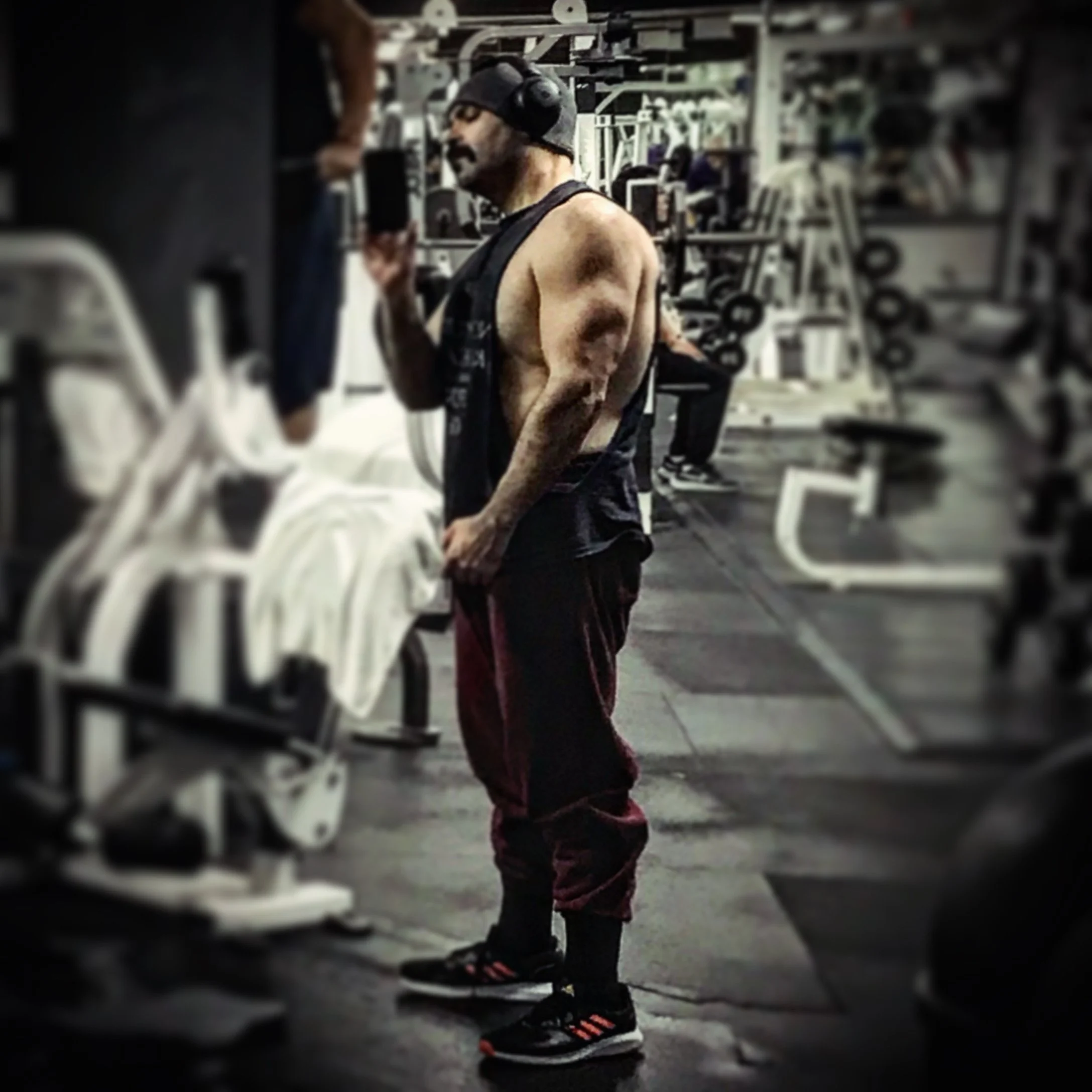
Byzantine Iconography blended with gym selfie - Created using Meta AI

My relationship to bodybuilding has never been about competition. I have no interest in stage lights, spray tans, or trophies. What draws me to it is far quieter and far more personal. It is a discipline that parallels my artistic life in ways that are difficult to explain to anyone who views training as merely physical. For me, it is sculptural study, psychological conditioning, and philosophical rehearsal all at once.

At the most obvious level, bodybuilding sharpens my understanding of anatomy. As someone who works across painting, photography, cinematography, and lighting, I am constantly studying the human form. But studying anatomy from books or classical drawings is different from feeling how a muscle contracts, how tension distributes across the spine, how deltoids articulate under load, or how fatigue subtly alters posture. Training forces a lived intimacy with structure. It deepens my sensitivity to how light will wrap around a torso, how shadow pools beneath a ribcage, how proportion shifts the entire emotional tone of a figure. The gym becomes a laboratory for observing form from the inside out.

Yet the more profound value of bodybuilding is psychological. Muscle cannot be rushed. It responds only to consistency, recovery, and patience. It exposes delusion quickly. If you skip work, the mirror reflects it. If you overestimate effort, the body corrects your narrative. It is a brutally honest feedback system. That honesty mirrors the creative process. You cannot shortcut mastery. You cannot fake cohesion. You cannot rely on bursts of inspiration while neglecting daily discipline. Training conditions me to respect process over performance.

Because I am not preparing for competition, I am freed from comparison. There is no scoreboard. No external standard beyond symmetry and intention. The practice becomes internal. It becomes aesthetic inquiry rather than social validation. In that sense, bodybuilding functions much like painting in solitude. It is an ongoing dialogue between aspiration and reality. It is incremental refinement. It is an act of authorship over one’s own development.

There is also something meditative about structured strain. Repetition under resistance demands presence. It quiets mental noise. It sharpens focus. And in that state, I often find clarity that carries back into my studio work. The willingness to endure discomfort in the gym translates directly to creative risk-taking. Both require faith in long arcs of growth that are invisible day to day but undeniable over years.

Ultimately, non-competitive bodybuilding reinforces a principle that governs my entire life: freedom is built on discipline. The aesthetic result is secondary. What matters is the structure beneath it — the quiet commitment to incremental progress, the refusal to chase shortcuts, the understanding that transformation, whether physical or artistic, is earned slowly and deliberately. The body becomes less an object of display and more a medium through which discipline is practiced. And discipline, more than talent, is what sustains a creative life.

tags: #BodyAsArt, #PhysicalAesthetics, #TheArtOfTheBody, #EmbodiedPractice, #LivingArt, #EmbodiedDiscipline, #ArtThroughDiscipline, #CreativeDiscipline, #AestheticPractice, #TheBodyAsMedium, #DisciplineOfTheBody, #FreedomThroughDiscipline, #DailyDiscipline, #PhysicalDiscipline, #SelfMastery, #EarnedStrength, #LongTermTraining, #IncrementalProgress, #ConsistencyOverIntensity, #DisciplineEqualsFreedom, #NonCompetitiveBodybuilding, #BodybuildingAsPractice, #ArtOfTraining, #BodybuildingLifestyle, #BodyAsPractice, #TrainingForLife, #LifelongTraining, #PersonalBodybuilding, #IntentionalTraining, #StrengthPractice, #PhilosophyOfStrength, #ReflectiveWriting, #ThoughtfulTraining, #PhilosophyOfTheBody, #MindBodyPractice, #CreativePractice, #IntentionalLiving, #DepthOverNoise
Friday 03.27.26
Posted by FRESKO IMAGEWORKS
 

Strength and Softness

Photo Credit: Orlando Vivas

There is a misconception that strength requires hardness — emotional distance, stoicism, impermeability. In physical culture especially, toughness is often equated with silence and restraint. But strength and softness are not opposites. They are complements.

In training, rigidity leads to injury. A muscle that cannot lengthen tears. A joint that cannot adapt deteriorates. True strength includes flexibility. It includes responsiveness. Emotionally, the same principle applies.

To feel deeply is not weakness. It is sensitivity — the capacity to register nuance. The challenge is not eliminating softness, but stabilizing it within structure. I have spent much of my life cultivating independence. Self-sufficiency can resemble invulnerability. It feels controlled. Predictable. But over time, impermeability becomes isolation.

There is courage in allowing oneself to be affected. To care openly. To express uncertainty without collapsing into it. This tension is particularly present in masculine spaces. Physical strength is visible. Emotional depth is less so. Yet the men I respect most — whether artists, athletes, or thinkers — exhibit both.

Consider classical representations of heroes: powerful in form yet expressive in gesture. Even in sculpture, the greatest works balance tension and vulnerability. The body may be carved in marble, but the face often reveals interior life. Strength without softness becomes brittle. Softness without strength becomes unstable. The integration of both produces resilience.

Resilience is not the absence of fracture; it is the ability to recover. It requires internal elasticity. It requires acknowledging impact without disintegrating. For me, the pursuit of strength — in the gym or in thought — is no longer about dominance. It is about capacity. The capacity to endure stress, to hold complexity, to remain grounded while open. Softness does not negate discipline. It humanizes it. To build a powerful body while suppressing emotional awareness is incomplete development. To cultivate sensitivity without structure is equally incomplete.

Integration is the aim. Strength should expand possibility, not narrow it. And softness, properly anchored, expands connection.

tags: #StrengthAndSoftness, #MindBodyBalance, #SelfMastery, #EmotionalStrength, #InnerDiscipline, #ConsciousLiving, #StrengthTrainingMindset, #ReflectiveWriting, #GrowthMindset, #IntentionalLiving, #HumanizedStrength, #StrongBodyStrongMind, #PhilosophyOfLife, #InnerWork, #PurposeDrivenLife, #BalancedStrength, #StrengthWithSensitivity, #DisciplinedMind, #IntegratedSelf, #HolisticStrength, #ModernStoicism, #PhilosophyOfStrength, #SelfInquiry, #PersonalEthics, #PhilosophicalThought, #DepthOverNoise, #SelfDevelopment, #MentalDiscipline, #PersonalGrowthJourney, #BuildYourself, #EvolveDaily, #TrainWithPurpose, #FunctionalStrength, #AthleticMindset, #StrengthLifestyle, #TrainAndReflect, #DisciplineEqualsFreedom, #PhysicalAndMentalStrength, #EmotionalAwareness, #EmotionalIntelligence, #SelfAwarenessJourney, #HumanDevelopment, #EmotionalDepth, #MindfulStrength, #AwarenessPractice, #InnerBalance, #PsychologicalGrowth, #ThoughtfulWriting, #BlogPhilosophy, #LongformWriting, #WritersOfInsight, #EssayWriting, #WritersPerspective, #IntellectualBlog, #IdeasWorthExploring
Friday 03.06.26
Posted by FRESKO IMAGEWORKS
 

Motion Picture & Print Photography by FRANCISCO ESCOBAR