
COLINI: A Life Painted Between Worlds
COLINI at home, Scranton, PA - 2003
VOJEN WILHELM CECH-COLINI WAS born in 1924 in Kolín, Czechoslovakia — a historic town east of Prague shaped by Gothic architecture, layered history, and the shifting political tensions of early 20th-century Europe. He was born to a German father from a military background and a Czech mother who first recognized and nurtured his artistic talent. It was his mother who encouraged him to draw seriously, guiding his early hand and instilling in him a reverence for discipline, history, and craft.
His childhood unfolded during one of Europe’s most unstable periods. The German occupation of Czechoslovakia would mark his formative years, and like many young men of his generation, he was conscripted into military service. The psychological imprint of that era — displacement, authority, violence, and fractured identity — would remain embedded in his work for decades.
(Future site of video package from Bohemia National Hall, in New York City, featuring the art show, and an interview with Alex Cech, Brother to Vojen Colini)
Though Colini rarely reduced his art to autobiography, the specter of war hovers throughout his oeuvre. His paintings often evoke unease: solitary figures, suspended landscapes, architectural ruins, allegorical confrontations between power and vulnerability. These are not literal depictions of battle — rather, they are meditations on memory and consequence.
The horrors of war shaped not only his themes but his worldview. His imagery frequently reflects a tension between order and chaos, permanence and destruction. The discipline of his technique stands in contrast to the instability of his subject matter — perhaps a deliberate attempt to impose structure on a world he had once seen unravel.
MORNING LIGHT illuminates the loft. A quiet moment before the day begins.
COLINI carefully begins adding color to the underpainting of Kolin on the Elbe, a painting that would be his last-known completed work. Scranton, PA - 2004
Egg Tempera: The Discipline of Light
Colini chose egg tempera as his primary medium — a painstaking technique associated with Renaissance masters. Made from pigment mixed with egg yolk, tempera demands patience, precision, and control. It does not allow for improvisation in the way oil paint might; it rewards deliberation.
Layer by translucent layer, he built luminous surfaces that seem to glow from within. Fine lines, architectural detail, and symbolic imagery emerge with clarity and permanence. In an era dominated by abstraction and conceptualism, Colini remained committed to technical mastery. His devotion to tempera is one reason many in the art world regard him as a modern Renaissance master — not in imitation, but in discipline.
A Citizen of Many Countries
Colini’s life was geographically expansive. He lived and worked in France, Venezuela, Canada, and the United States, absorbing cultural influences from each place. Yet no matter how far he traveled, Central Europe remained an emotional anchor. His paintings often reference architecture — vaulted ceilings, towers, arcades, and plazas that evoke the cities of his youth. Space in his work is never accidental; it is constructed, inhabited, remembered. Though widely traveled, he carried a persistent sense of displacement — a theme that subtly informs many compositions.
(Future site of video package featuring paintings from the retrospective show at the Czech Embassy in Washington, D.C. in 2012 with a presentation and interview with Erica Funke of North Eastern Pennsylvania’s NPR station.)
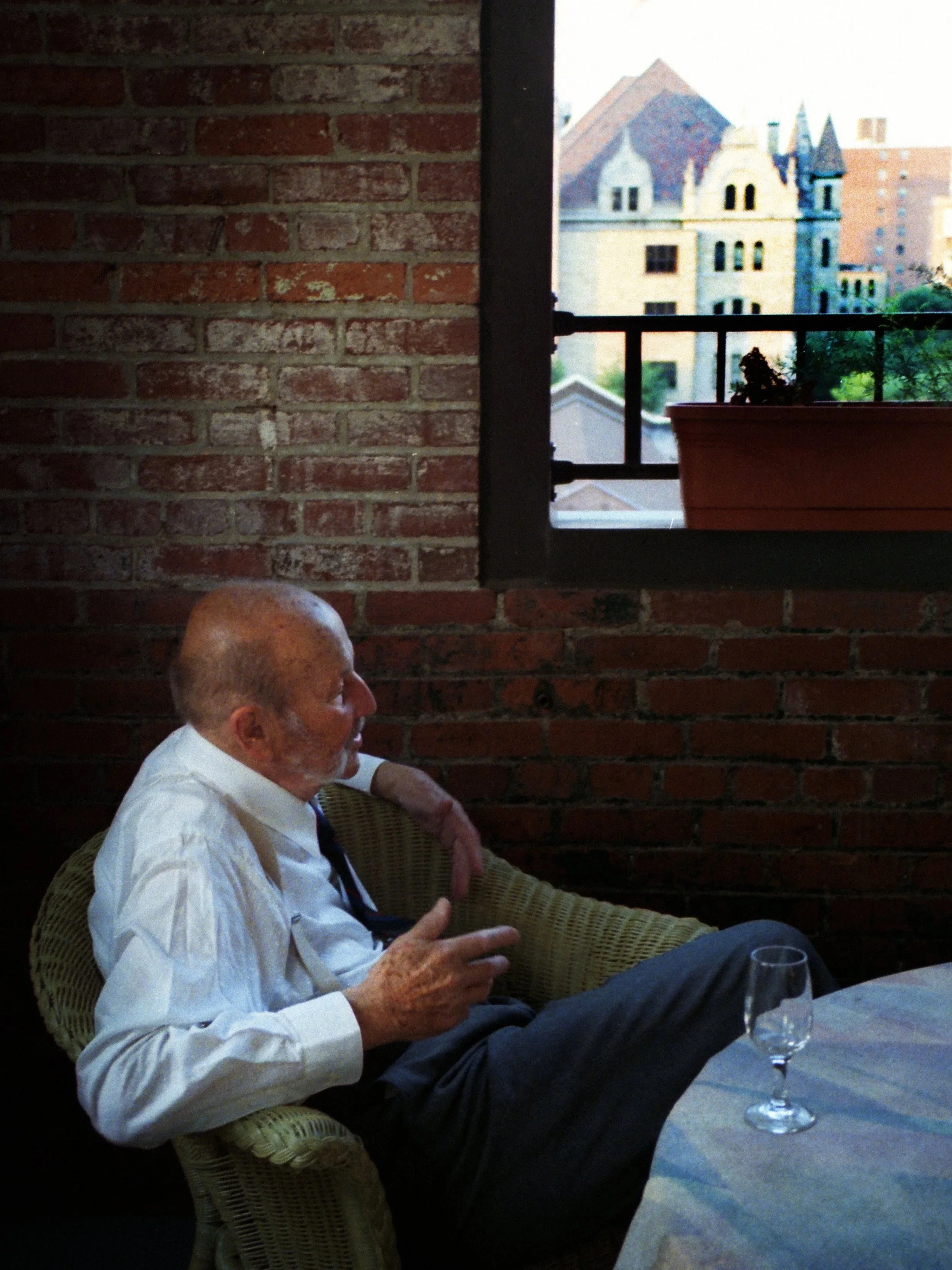
Colini at home, Scranton, PA - 2004
Scranton: An Unexpected Echo of Home
In his later years, Colini settled in Scranton, Pennsylvania. There, in a light-filled studio, he continued to paint with unwavering focus. Downtown Scranton’s historic architecture — its masonry facades, narrow streets, and early 20th-century detailing — reminded him of the old cities of Central Europe. It was a quiet echo of Kolín and Prague, thousands of miles away yet emotionally proximate.
Visitors to his home often found him surrounded by panels in progress, brushes arranged with care, pigments ground and prepared. Painting was not performance; it was ritual. Even in his final years, he worked steadily, refining compositions and revisiting themes of history, morality, and the human condition.
COLINI with fellow artist, CHRISTOPHER REIS for their joint exhibit, A CELEBRATION OF TWO MASTERS, Tunkhannock, PA 2003
COLINI explains part of his Venezuelan Tryptic to a gallery patron during his show at Lizza Gallery in Tunkhannok, PA.
National Recognition and Artistic Legacy
Though he lived much of his later life abroad, Colini has been regarded by many as a national laureate of Czech art — an artist whose work reflects both the trauma and resilience of 20th-century Central Europe. Collectors and critics have described him as bridging epochs: Renaissance discipline, surreal imagination, modern psychological inquiry. His catalogue of work — preserved and documented through archival collections — reflects decades of unwavering commitment to craft. He passed away in February 2010 in Scranton, Pennsylvania, leaving behind a body of work that continues to resonate across borders and generations.
(Future site of video package featuring an interview with Meghan Cech, wife of Vojen Colini)
Continuing the Story
The story of Vojen Wilhelm Cech-Colini continues to unfold. A feature documentary exploring his life, artistic philosophy, and historical context is currently in development, alongside a feature narrative film inspired by his journey from war-torn Europe to the United States. Together, these projects aim to bring broader attention to a painter whose life bridged nations, eras, and artistic traditions.